
Why tarmac still earns its place
Quick to install
A faster laying process can help get practical areas back into use sooner.
Good for larger sites
Tarmac works well on drives, access roads and wider surfaced areas.
Finish options available
Choose a standard smooth look or a coloured finish to suit the site.
A practical surface for busy areas
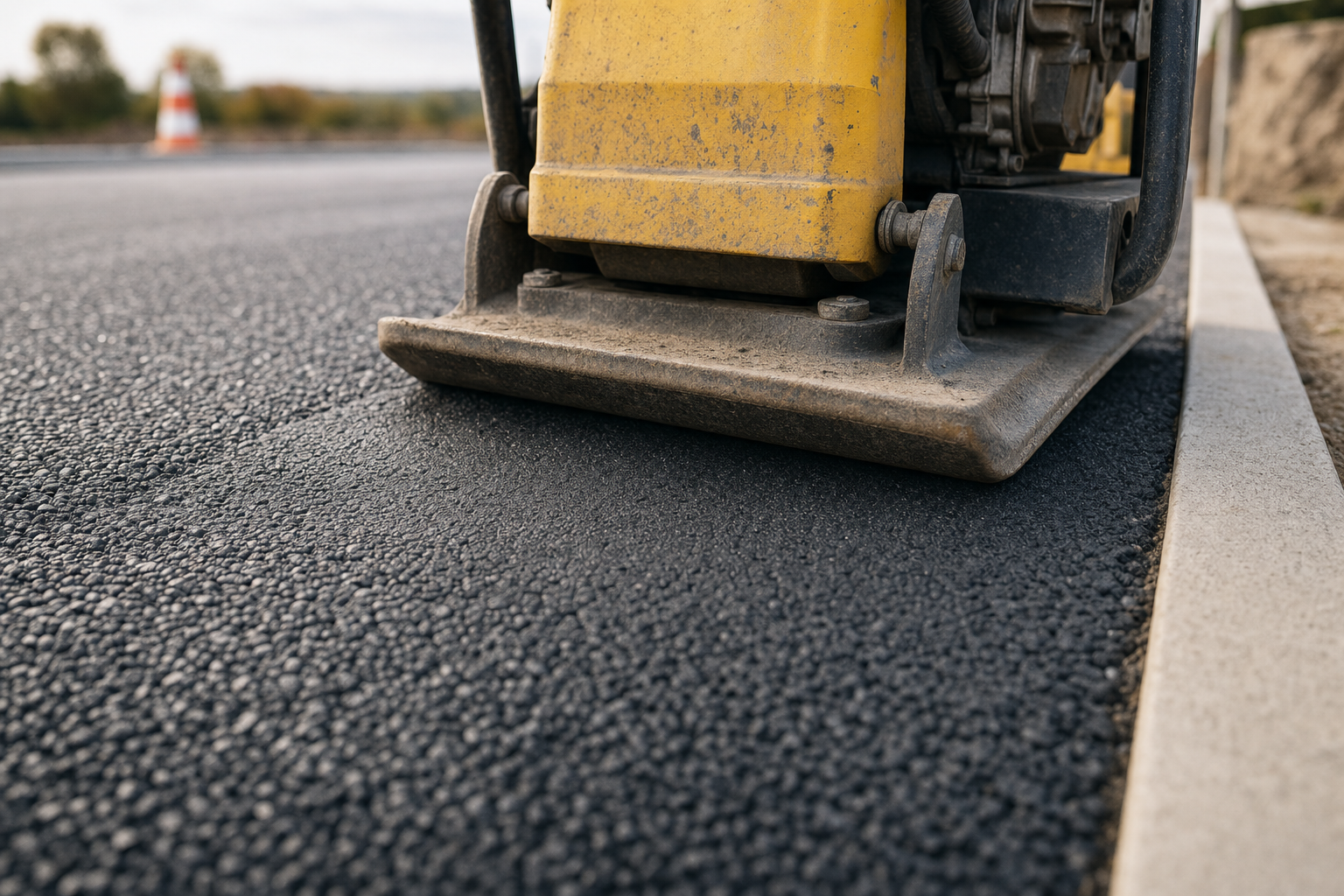
If you want a driveway or access area that gets laid quickly and gets on with the job, tarmac is hard to ignore. It suits residential drives, commercial premises, private roads, car parks and paths where the surface needs to cope with regular vehicle or foot traffic without making a song and dance about itself. We plan the work around the size of the site, the condition of the existing surface and how the area is used day to day. With Trade Right Paving & Roofing Ltd, the speed of installation never replaces the need for good levels, sound edging, drainage and compaction, because that is what keeps the surface stable once the job is finished.
Planned around access, levels and final finish
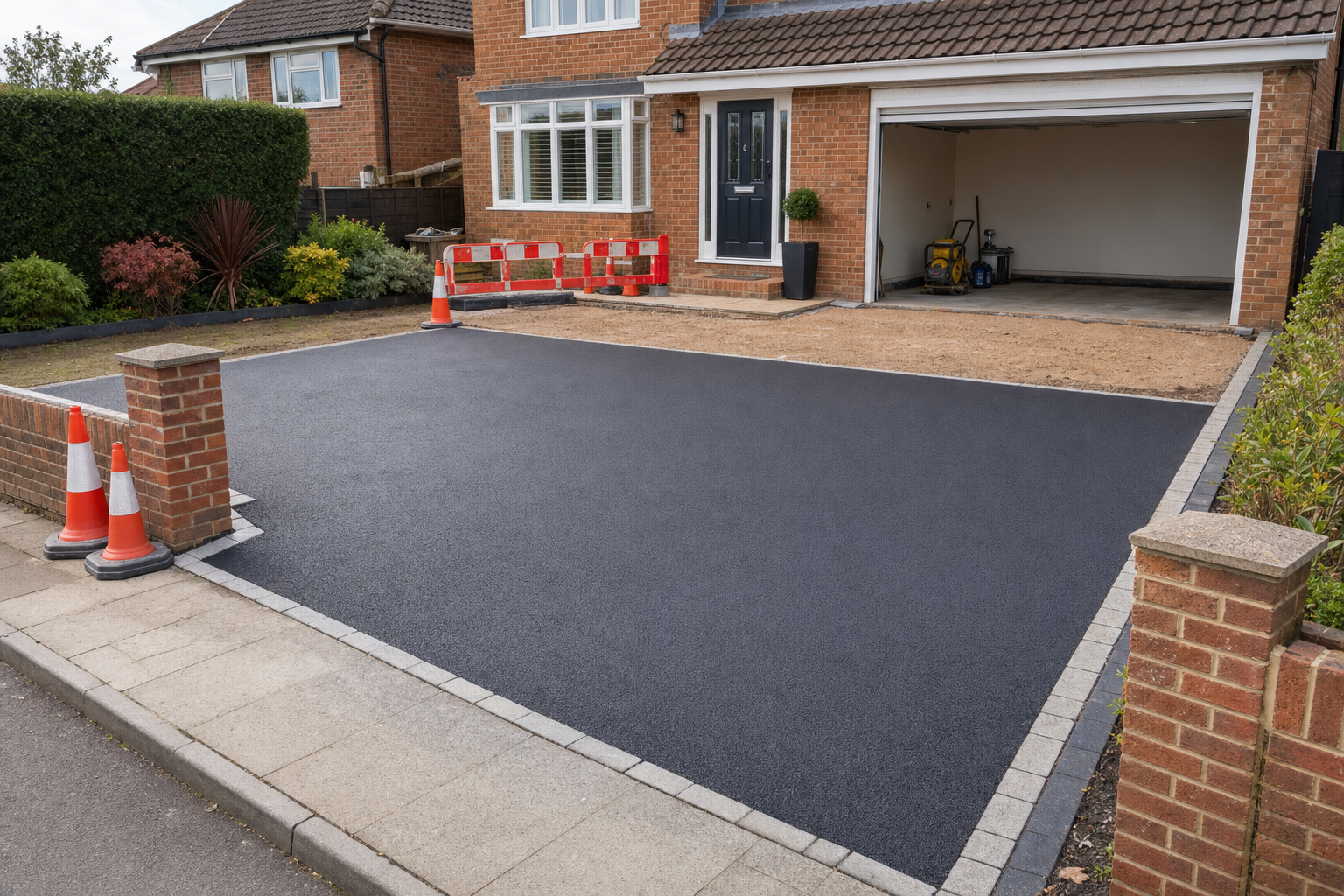
Some tarmac jobs are full excavations. Others are resurfacing projects where the existing base can still play its part. We assess which approach fits the site, then prepare the sub-base, set levels, sort drainage, form the edges and lay and compact the surface. You can keep the look plain and practical or choose a decorative coloured tarmac finish if it suits the setting better. With Trade Right Paving & Roofing Ltd, the installation plan is built around access, use and the condition of the ground rather than a one-size-fits-all method.
Frequently asked questions
Where is tarmac a sensible choice?
Tarmac is a practical option for driveways, paths, private roads, commercial areas and car parks where regular use is expected. It is often chosen when durability and a quicker installation matter more than a decorative jointed finish.
Do you need to excavate for every tarmac job?
Not always. Some projects need full excavation and a fresh sub-base, while others can be resurfaced if the existing base is still sound. We inspect the site first, because the right preparation depends on the condition of the ground underneath.
What affects the plan for a tarmac installation?
Site size, existing surface condition, access, drainage, edging and the intended use all shape the job. We look at how vehicles move over the area and how water runs off it, because those practical details affect how the finished surface performs.